
VIP member
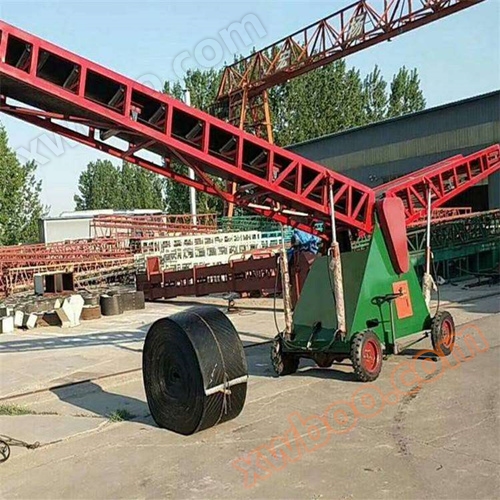
Xinjiang hydraulic conveyor
Description: Daily maintenance and upkeep of hydraulic conveyors in Xinjiang: 1. Before driving, check the tightness of all bolts, adjust the tightnes
Product details
Description:
Xinjiang hydraulic conveyorDaily maintenance and upkeep
1. Check before driving
Check the tightness of all bolts, adjust the tightness of the tape, and ensure that the tape does not slip on the drum.
2. Conveyor belt
1) After a period of use, the conveyor belt will loosen, and the tension screw or counterweight should be adjusted.
2) The exposed core of the conveyor belt should be repaired in a timely manner.
3) When the core of the conveyor belt is corroded, broken, or corroded, the damaged section should be scrapped.
4) Regularly check for any abnormal conditions at the joints of the conveyor belt.
5) Is there any wear on the upper and lower rubber surfaces of the conveyor belt, and is there half friction on the tape.
6) When the conveyor belt is severely damaged and needs to be replaced, the laying of longer conveyor belts can generally be carried out by dragging the old tape with the new tape.
3. Brakes
1) The brake is prone to oil contamination at the driving device. To avoid affecting the braking effect, the nearby oil should be cleaned up in a timely manner.
2) When cracks appear on the brake wheel and the wear of the rim thickness of the brake wheel reaches 40% of the original thickness, it should be scrapped.
4. Drum
1) If cracks appear at the weld seam, they should be repaired in a timely manner and can only be used after passing the inspection;
2) The adhesive layer has aged and cracked, and should be replaced in a timely manner;
3) The lubrication of rolling bearings uses No. 1 or No. 2 calcium sodium based grease. If the production is carried out in three consecutive shifts, it should be replaced every three months, and the cycle can be appropriately extended or shortened according to the situation during use.
5. Roller support
There should be spare parts in stock, and they should be replaced in a timely manner when the rotation is not flexible or the cylinder skin is worn through.
6. Cleaning device
1) When the exposed height of the cleaning scraper is less than 20mm, it should be adjusted or replaced in a timely manner;
2) When the cleaning scraper has poor contact with the tape, it should be adjusted to achieve a balanced contact length of 85% or more with the drum busbar.
7. Tighten the screw
1) When the tightening screw is not in use, it should be coated with lubricating grease and wrapped in paper to prevent dust from falling in;
2) When the tightening screw is corroded and unable to rotate, it should be replaced.
8. Reducer
1) Regularly check the oil level inside the gearbox;
2) The gearbox should undergo minor repairs every six months and major repairs every two years. Minor repairs include replacing lubricating oil, checking the condition of transmission gears, and sealing the rolling bearings. In addition to minor repairs, major repairs should also involve disassembling and inspecting all parts for repair or replacement. Especially for transmission gears, if any of the following situations occur, they should be scrapped: a) cracks appear; b) The tooth surface pitting reaches 30% of the meshing surface and the depth reaches 10% of the tooth thickness; c) The tooth thickness wear of meshing gears reaches 10% of the tooth thickness, while the wear of other stages of gears reaches 20% of the original tooth thickness;
3) After replacing the gearbox or some of its gears, the lubricating oil should be replaced with new oil after running for 500 hours;
4) For gearboxes that work continuously for a long time, the oil must be changed every three months; If the temperature rise exceeds 60 ℃ or the oil temperature exceeds 85 ℃ during use, the lubricating oil must be replaced before use.
Online inquiry
-
Contacts
-
Company
-
Telephone
-
Email
-
WeChat
-
Verification Code
-
Message Content
-