
VIP member
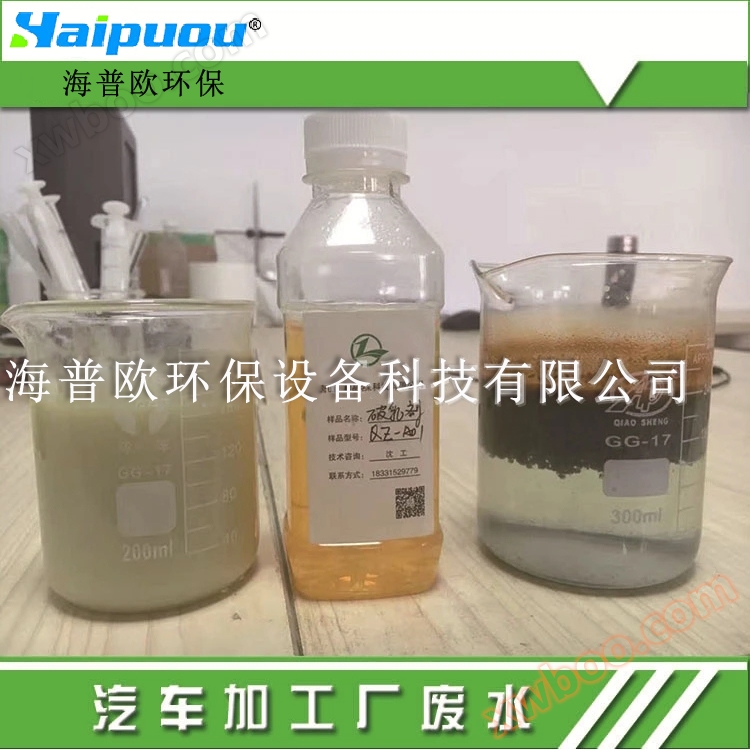
Wastewater from automobile processing plants
The production process of automobile industry mainly includes mechanical processing, forming, welding, surface treatment, painting, final assembly and
Product details
Wastewater from automobile processing plants
The production process of the automotive industry mainly includes machining, forming, welding, surface treatment, painting, final assembly and other processes, among which surface treatment and painting are the main processes for discharging wastewater. The wastewater mainly contains surfactants, oils, phosphates, metal salts, organic solvents and other substances discharged from surface treatment and coating processes, as well as high concentration emulsions discharged from machining.
At present, the main methods for treating wastewater in the automotive industry include biochemical treatment, physicochemical treatment, and membrane separation. Due to the variety of wastewater types and high concentration of pollutants, some wastewater has poor biodegradability, and simple biochemical treatment cannot meet the standard requirements;Simple physical and chemical treatment is not only costly, but also has poor removal efficiency for dissolved organic matter, and the effluent does not meet the discharge standards;The membrane separation method is related to the performance of the membrane and has high operating costs, so it is rarely used. So currently, the treatment process of automobile industry wastewater mostly adopts a combination of physicochemical and biochemical treatment methods.
The wastewater treatment of automobile manufacturing plants adopts "pretreatment+Two level physical and chemical treatment+Biochemical treatment+The method of "deep processing" includes the following steps:
1)Wastewater collection:
Input the emulsified waste liquid, degreasing waste liquid, phosphating waste liquid, and electrophoresis waste liquid generated in the automotive industry into the corresponding waste liquid regulating tanks;
Input the spray paint wastewater, phosphating wastewater, degreasing wastewater, and electrophoresis wastewater generated in the automotive industry into the corresponding wastewater regulation tanks;
Each waste liquid regulating tank and wastewater regulating tank is used to collect and store various waste liquids and wastewater discharged from the factory area. The bottom is connected to a water outlet and a water pump. When treatment is required, each water pump is used to transport various waste liquids and wastewater to various treatment structures.
2)Preprocessing: Pre treat the waste liquids in each waste liquid regulation tank separately and input the effluent into the buffer tank;
The buffer pool is used to store the pre treated effluent delivered by various pre treated structures. The bottom is equipped with an outlet connected to a water pump, and the pre treated water can be delivered to the homogenization tank as needed.
3) Two stage physicochemical treatment: the pretreated wastewater in the buffer tank, the wastewater in the wastewater regulating tank and the waste liquid in the electrophoresis waste liquid regulating tank are uniformly regulated in the homogenizing tank;Perform two-stage physicochemical treatment on the mixed wastewater in the homogenization tank, with the first stage being coagulation sedimentation and the second stage being coagulation air flotation;
4) Biochemical treatment: The effluent from the two-stage physicochemical treatment is sent to a biological contact oxidation tank for biochemical treatment using the biological contact oxidation method;
5) The effluent after biochemical treatment is further separated into sludge and water in the secondary sedimentation tank, and finally flows into the discharge tank for discharge.
Regularly discharging waste liquids of different types with high concentrations are transported through separate pipelines to independent collection tanks and undergo separate pretreatment, which is highly targeted, effective, and saves chemicals. For certain high concentration waste liquids that are difficult to handle, such as electrophoresis waste liquids, they can be diluted with mixed wastewater in small batches when the discharge volume is not large. When the discharge volume increases, they can also be separately pretreated. Pre treated effluent does not directly enter the subsequent treatment stage, but is mixed in a certain proportion according to the water quality parameters of each collection tank, so that the incoming water quality in the continuous treatment stage remains stable within a certain range, avoiding a decrease in treatment effect caused by significant changes in water quality. In the continuous treatment process, a combination of physical, chemical, and biochemical processes is adopted. The physical and chemical treatment is a two-stage chemical coagulation treatment, which effectively removes inorganic pollutants such as heavy metals and phosphates from the wastewater, and abandons the expensive activated carbon filtration process for operation and regeneration. Biochemical treatment adopts efficient contact oxidation method, with high microbial concentration and activity, which has a high treatment effect on organic matter and strong impact load resistance. There is no sludge swelling problem, and the operation is stable. The deep treatment of biochemical effluent for reuse has achieved the goal of energy conservation and emission reduction.
Online inquiry
-
Contacts
-
Company
-
Telephone
-
Email
-
WeChat
-
Verification Code
-
Message Content
-