
VIP member
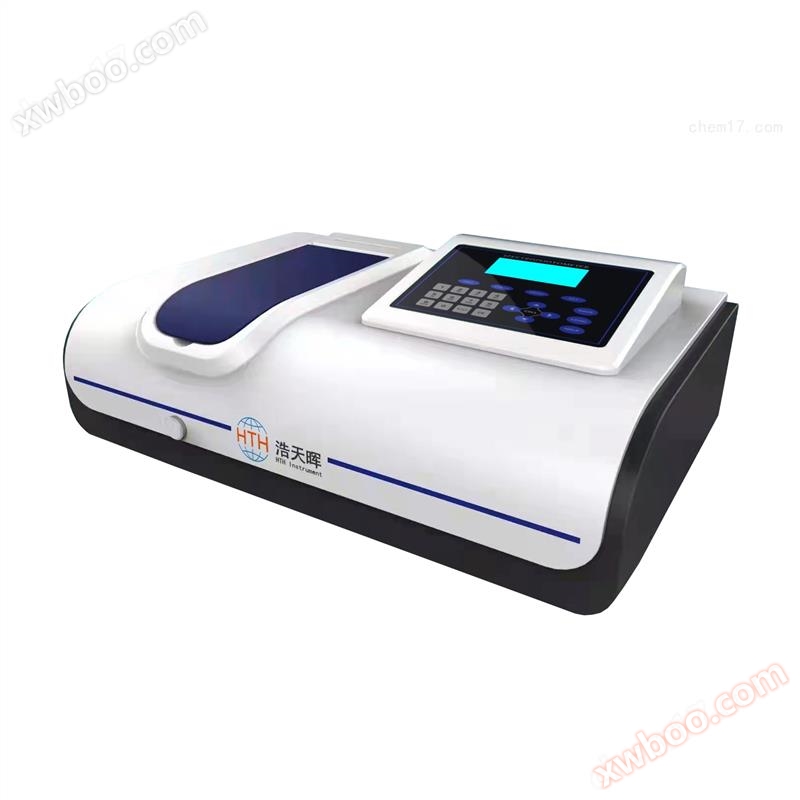
Visible spectrophotometer manufacturer
Beijing Haotianhui Instrument Co., Ltd. is a manufacturer of visible spectrophotometers. The TV-1 visible spectrophotometer supplied can be applied in
Product details
TV-1Visible spectrophotometerInstrument features:
Using single-chip microcomputer control,128*64LCD display
The spacious LCD display can display multiple sets of data
Huge memory space, capable of storing multiple sets of data and curves
Automatic adjustment0Adjustment***function
Automatic wavelength adjustment
Automatic lamp change, automatic color filter change, large sample pool(0.5mm~100mm)
Capable of measuring standard curves using ten point standard samples
Can be directly inputtedKTheBEstablishing standard curves for quantitative measurement of factors
Can directly input standard samples and corresponding concentration values to establish a standard curve for quantitative measurement
Adjustable electrical storage of standard curve parameters for measurement settings, capable of saving multiple standard curves
Standard curves can be edited at any time, making it convenient for users to use
Equipped with a universal parallel printing interface or micro printing interface, it can print title blocks, measurement data, curve parameters, curve standard sample points, and curves
matchUSBinterface
can pass throughPCControl to achieve more precise and flexible measurement requirements (optional)

TV-1Visible spectrophotometerTechnical indicators and basic parameters:
Wavelength range:320~1100nmSpectral bandwidth:4nm;
Wavelength accuracy:±0.5nmWavelength reproducibility:≤0.2nm
Transmittance accuracy±0.5%tTransmission density repeatability: 0.2% t
Scattered light:≤0.05%τ(220nm NaI,340nm NaNO2)Stability:0.001A/h(500nmAfter preheating)
Measurement methods: transmittance, absorbance, concentration, energy Wavelength adjustment: automatic adjustment
Luminous range:-0.3~3ADisplay mode:128*64liquid crystal
Detector: Imported silicon photodiode Light source: imported tungsten lamp
Power Supply:AC 220V/50Hz 110V/60HzPower:120W
Instrument size:480×350×220mmNet weight of the host:11Kg
Maintenance method:
1. Cleaning: Regularly clean the surface of the instrument and the sample chamber to avoid dust and impurities from adhering and affecting measurement accuracy.
2. Calibration: Regularly calibrate the instrument to ensure accurate and reliable measurement results. Calibration should be carried out according to the instrument manual, generally requiring the use of standard solutions and control samples.
3. Light source maintenance: The light source is one of the key components of the photometer and requires regular inspection and replacement. Old light sources can affect measurement accuracy, so it is recommended to replace them once a year or according to the instrument instructions.
4. Power maintenance: Maintaining a stable voltage can ensure the normal operation of the instrument, so attention should be paid to the connection of the power line and the stability of the voltage.
5. Storage: When not in use for a long time, the instrument should be stored in a dry, dark, and ventilated place to prevent dust and moisture from entering the instrument and affecting its performance and lifespan.
It should be noted that before operating the instrument, one should familiarize themselves with the instrument's user manual and strictly follow the instructions for maintenance and operation.
Online inquiry
-
Contacts
-
Company
-
Telephone
-
Email
-
WeChat
-
Verification Code
-
Message Content
-