
VIP member

Thermal measurement system using on-off time area method
System Introduction: The on-off time area method heat metering system is a heat metering system scheme that measures the overall heat of a building an
Product details
System Introduction
The on-off time area method heat metering system is a heat metering system scheme that measures the overall heat of a building and distributes the heat based on the user's heating area and heating time.
The system measures the heating heat consumption of the entire building, and each user in the building adjusts the heating room temperature according to their heating needs. The heating control valve controls the room temperature balance through on-off mode, and the user's heat consumption is calculated and shared based on the user's heating area and heating on-off time.
This system integrates computer technology, communication technology, information technology, network technology, database management technology, automatic control technology, heating hydraulic balance technology, energy-saving technology and other technologies, providing a system solution for energy-saving and household heat metering in the operation and management of heating systems.
This system is suitable forThe indoor heating system should be a household independent heating system with a shared riser and dual pipe systemIt can be applied to household heat metering for newly built centralized heating residential buildings, as well as to energy-saving renovation of heat metering for existing building heating residential buildings. Suitable for both radiator heating systems and floor heating systems.
The system solution also integrates the energy management system solution for the heating network, including energy-saving renovation plans for heat exchange stations and heat sources, hydraulic balance renovation plans for the heating network, and monitoring and scheduling plans for the heating network, to achieve energy-saving goals for heating.
System Principles
The working principle of the on-off time area method heat metering system is to install a heat meter at the thermal inlet of the building to measure the heat consumption of the entire building during the heating period; Install a room temperature controller in the heating user's room to regulate the heating room temperature, and install on/off controllers on the branch pipelines of each user to control the heating on/off time to achieve room temperature balance; The system calculates the total heat consumed by the building based on the heating area and cumulative heating on/off time of each user.
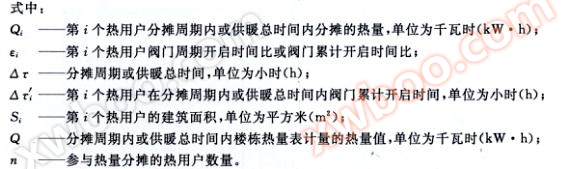
Heat allocation calculation formula:

Functional Description
1) System function: It integrates multiple functions such as heating metering, control, billing, and energy conservation;
2) Measurement and Allocation Function: ByThe total heat consumption of the building's metered heating system is distributed fairly and reasonably based on the user's heating period temperature time function combined with the heating area;
3) Room temperature control function: userRoom temperature can be set as needed, automatically/ManualAdjust and control the heating status, achieve room temperature balance control, and ensure energy saving for users' heating needs;
4) Remote monitoring function:Real time remote monitoring and management of heating systems and user heating operation status;
5)Abnormal alarm function: System equipment abnormal protection and monitoring function ensure system security and stability;
6) Local display query function: The collection calculator is configured with a local display LCD touch screen to enable on-site query of user and heating information, facilitating debugging, operation, and maintenance;
7) Data sharing function: Data can be transmitted over long distances to the management platform server, enabling data sharing with heating management departments or financial charging departments, making it easy to manage and charge;
Equipment, constant pressure or constant current water supply equipment, heating network operation monitoring and scheduling system, etc.
Technical characteristics of the solution
1 Integrating metering, control, billing, and energy conservation;
2 Building measurement, allocation by household, fair and reasonable;
3 Integrating hydraulic balance and energy-saving heating technology, the heating system effectively saves energy;
4 Intelligent temperature control and room temperature adjustment ensure energy efficiency for users' heating needs;
5 Real time remote monitoring and management of heating systems and user heating operation status;
6 The abnormal protection and monitoring functions of system equipment ensure the security and stability of the system;
7 Integrating multiple communication methods such as wireless, bus, and public network, the system network is flexible and reliable;
8 The modular design of the system management platform and client software is powerful, easy to use, and conducive to upgrading;
9 Powerful data processing and mining techniques provide safe and reliable operational data for heating operations, improving the level of heating management;
10 System Open InterfaceCan share data, coordinate work, and link control with other intelligent systems;
11 Suitable for different price and fee management modes, easy to manage;
12 Design, construction, operation, maintenance, upgrading, and operation are simple and convenient, with low investment and high cost-effectiveness;
System architecture composition
The on-off time area method heat metering system mainly consists of three parts: indoor structure, building structure, and management system, as follows:
1. Indoor structure:
Mainly including room temperature controller and on-off control valve. The room temperature controller is installed in a fixed position inside the user's room (or can be moved to a suitable location), used for user room temperature regulation and parameter inquiry; The on-off controller is installed in the user's heating inlet pipeline, and controls the heating valve to open or close according to user and system commands to control the room temperature; The two communicate wirelessly for data.2. Building structure:
It mainly includes hydraulic balance equipment such as collection calculators, power distribution boxes, building heat meters, differential pressure or flow balance valves. The collection calculator collects heating operation data from building heat meters and user on-off controllers, calculates and distributes user heat, and usesGPRS or network communication method exchanges data with the system management center, while conducting system and user management and control; The power distribution box provides working power and safety protection for the heat metering system; The building heat meter measures the heat consumption of the entire building, using ultrasonic or electromagnetic heat meters; Differential pressure or flow balance valves are used for regulating the hydraulic balance of heating in buildings and for users.
3. Management system:
The Jingyuan Energy Monitoring and Management System Platform mainly includes a central computer service station (data transmission terminal, data serverWEB ServerNetwork equipment, data centers, system management platform software, and client software are used for data storage, management, statistical analysis, remote monitoring, and billing management. At the same time, client queries, payments, maintenance, and other management are also carried out.
The Jingyuan Energy Monitoring and Management System Platform includes the on-off time area method heat metering system, flow temperature method heat metering system, heat meter temperature control integrated system, heat network monitoring and management system, heat meter and water meter management system6 independent subsystem platforms.The management platform of the on-off time area method heat metering system integrates the comprehensive data information of the on-off time area method heat metering energy-saving management charging system, boiler room, heat exchange station energy-saving renovation, and monitoring system, providing a systematic solution for energy-saving design, construction, operation, and maintenance of heating.
The system adoptsB/S architecture allows both management departments and users to remotely log in to the system in real-time for information queries and authorization instructions, making management very convenient.
The server and management system receive the uploaded data from the data collector, detect and analyze energy consumption, etc., for practical decision-making by the management departmentAnd it can remotely control the user's valve opening and closing operations. managementThe software can monitor the running status of each collector in real time, and there are two types of meter reading methods: automatic and manual. Automatically collect data from all heat meters and valves according to the set time, and store the data; Manual meter reading is convenient for system debugging and maintenance.The management system canCreate various daily, monthly, and quarterly data reports, arrange them according to the community or user (optional order), and also arrange historical data for individual households to create an overall report. Combine the collected data with indoor area to calculate unit consumption, hydraulic stability analysis, and other operational analysis functions.
The on/off time area method heat metering system management platform includes multiple management modules such as system login, system security, basic information, equipment monitoring, meter reading management, room temperature monitoring, data query, data statistical analysis, report management, abnormal alarm, payment management, data backup, etc. It realizes the management and monitoring functions of login permissions, role management, security protection, user information, heating area information, equipment information, equipment configuration, equipment monitoring, instrument monitoring, on/off valve control, room temperature monitoring, remote meter reading management, real-time data query and statistical analysis, historical data query and statistical analysis, abnormal information query and processing, database management, report management, etc. It provides customers with intelligent collection, data management, real-time monitoring, flexible query, data security, etc. The sentence is: A complete management system that integrates user convenience and other functional features.
Characteristics of management software:
1)SystemB/S architecture design allows both management departments and users to remotely log in to the system in real-time for information queries and authorization instructions, making it convenient and efficient;
2)Real time performance, system data can be collected and updated in real-time according to user needs, reflecting the heating system and the actual heat consumption situation of users in a timely manner;
3)Intelligent, the system can remotely configure and modify system control parameters such as heating users, equipment, control valves, control temperature, heating time, data acquisition, etc. according to needs, achieving unmanned automatic operation monitoring and adjustment of the system;
4)Massive data storage, the system adopts independent data servers, which can be configured according to multiple regions, companies, etc., and can also be stored in the cloud. The data storage can be expanded arbitrarily, and heating users are not restricted, realizing the integration of urban heating data;
5)Security, system data servers, andThe web server is separated, and the data server adopts advanced network security design to effectively ensure the security of data. System access permissions and role settings further ensure the security of user data;
6)Openness, the system is compatible with multiple domestic and foreign manufacturers' heat metering equipment, and can seamlessly interface with the heating management department's heat network management system, data service system, and bank fee management system to share system data, reflecting the system's good compatibility and openness;
7)Flexibility, the system adopts a modular design, and users can configure different functional modules according to their needs. The system data analysis and query can be flexibly set to achieve different management modes such as regional and branch offices, achieving system cost-effectiveness;
8)Convenience, the user interface adopts a browser mode, and mobile and smart terminal clients can also be installed as needed. Users can perform real-time on-site query and control operations. The interface is simple and friendly, providing users with convenient services;
9)Easy to maintain, system operation self diagnostic security design, servers can be self owned or rented, and the company is equipped with professional management and maintenance service personnel to ensure the safe and normal operation of the system.
4. Energy saving system for heat exchange stations and heating network heat sources:
Closely connected to the on-off time area method heat metering system is the energy-saving renovation system of the entire heating network, which mainly includes hydraulic balance equipment for the secondary network, flow, pressure, and temperature monitoring equipment for the pipeline network, and climate compensation for the heat exchange station
Online inquiry
-
Contacts
-
Company
-
Telephone
-
Email
-
WeChat
-
Verification Code
-
Message Content
-