
VIP member

Solution for Online Monitoring System of Intravenous Medication Dispensing Center (PIVAS) Environment
Automatically collect floating or settling bacteria sampling instruments, dust particle counters, equipment environmental noise, and illumination digi
Product details
Technical Specifications
technical implementation

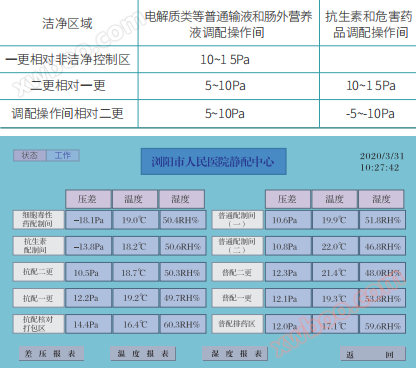
Requirements for pressure difference in clean area
System Features
Comprehensive perception
Automatically collect floating bacteria or settling bacteria sampling instruments, dust particle counters, equipment environmental noise, and illumination digital output signals around the clean environment detection indicators of the static distribution center
Fully perceive indoor environmental temperature, relative humidityCO2、Digital output signals such as PM2.5 and VOC
Real time collection of physical quantities such as clean area air exchange rate, gradient pressure difference, resistance pressure difference of high-efficiency filtration in junior high school, air valve status, access control, window magnetism, etc., automatic alarm for non-compliance
intelligent processing
Each functional area of the air supply and exhaust (return) system is treated as an independent unit, with preset target values. The opening of the air supply and exhaust valves is automatically adjusted according to changes in room pressure. When the air conditioning unit is shut down, compensation fans are activated to ensure gradient pressure difference and effective organization of airflow control
Visible, controllable, and traceable
Solve the challenges of verifying the effectiveness of airtightness, gradient pressure difference, and air exchange rate, ensuring that the WYSIWYG system, equipment, and emergency response system are in working condition at all times, and guaranteeing quality control of key links
Real time online monitoring of differential pressure, temperature, and humidity
24-hour uninterrupted monitoring of differential pressure values, temperature and humidity data in various functional areas
Real time alarm beyond preset value, can query real-time and historical data to achieve centralized control objectives
Scalable
Reserved dedicated communication interfaces for integrated data collection, reliable transmission, data storage, data processing and analysis, millisecond level control and other functions, seamlessly integrated into the intravenous medication information technology software system, fully compatible with HIS system to achieve information sharing
Simplify the process
Meet the requirements of Annex 2 Technical Specifications for Monitoring the Quality of Centralized Dispensing of Intravenous Drugs of the Guidelines, and record the data of all work and operation processes every day, so as to reduce labor intensity and work pressure
High return on investment
Reduce construction costs
Accurately monitor the difference in resistance between initial, intermediate, and high-efficiency filtration, reducing replacement and lowering costs
Accurately measure the ventilation rate of each functional area, control the gradient pressure difference of the air supply and exhaust (return) system, and achieve energy-saving effects
Model List
download
Online inquiry
-
Contacts
-
Company
-
Telephone
-
Email
-
WeChat
-
Verification Code
-
Message Content
-