VIP member
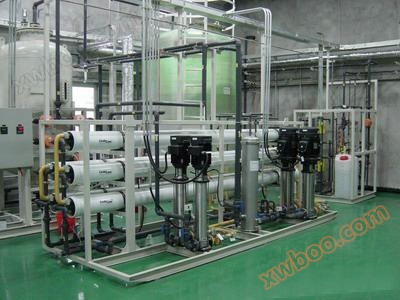
School quality water supply system
School quality water supply system
Product details
Equipment parameters:
NameSchool quality water supply system (school direct drinking water equipment) Model:JYK-LY-2
Processing technology: reverse osmosis pure water Usage: Commercial Rated frequency: 50 (Hz) Rated power: 3000 (w)
Inlet pressure: 0.1-0.3 (Mpa) Water supply: 1T/H (L/h) Dimensions: 2300 * 870 * 1950 (cm)
Voltage: 380 (V) Net weight: 1500 Water quality: 1-15
Quality based water supply is an emerging way of drinking water in China, which refers to separating the drinking water for drinking, soup making, cooking, etc. from the water for bathing, flushing toilets, laundry, and other household hygiene purposes, and supplying them separately through different pipelines; Among them, ordinary tap water is used for domestic hygiene water, and drinking water is high-quality drinking water obtained by deep purification treatment of ordinary tap water as the water source. Its characteristic is to remove harmful substances such as water source pollutants, disinfection by-products, and secondary pollutants in the tap water pipe network. It can be consumed directly without boiling, and is therefore also known as pipeline direct drinking water. Its water quality is clean, oxygen rich, and active, which is more beneficial to human health. This equipment is also known aspotable water equipment.
Application scope:
Residential areas, office buildings, hotels, restaurants, schools, factories, etc.
System advantages:
1. Excellent water quality: The effluent quality meets the drinking water quality standards and can be consumed directly.
2. Avoiding secondary pollution of water quality: The entire system operates in a closed and automatic manner, with regular circulation for sterilization, ensuring that there is no stagnant water in the pipeline and avoiding secondary pollution during the water delivery process.
3. Convenient and affordable: The pipeline direct drinking water equipment system is easy to use and cost-effective, solving the problems of high prices and inconvenient transportation of bottled water.
System principle:
Split quality water supply, also known as "dual channel water supply", refers to the use of special processes to process ordinary tap water into drinkable water according to people's different water needs in daily lifePurified waterThen it is transported to households through specialized pipelines and measured separately. The other water supply is untreated ordinary tap water, which is used for cleaning, bathroom cleaning, etc., and is transported and metered through ordinary pipelines. This type of pure water or purified water that can be consumed directly, as defined in the GB17323 standard of the People's Republic of China, is made from water that meets the hygiene standards for drinking water. It is produced through reverse osmosis and other appropriate processing methods, sealed in a container, and does not contain any additives. It is called pure water or direct drinking water. According to the CJ94 drinking water purification standard issued by the Ministry of Construction, water that also meets the hygiene standards for domestic drinking water is used as raw material, purified through hollow fiber ultrafiltration membranes, and then sent directly to each household for drinking through specialized pipelines, known as purified water. Due to its pure water quality and sweet entrance, which cannot be compared to other types of water, it is very suitable for the needs of modern cities. This type of equipment is also known as direct drinking water equipment.
There are four basic methods for producing pure water: distillation, electrodialysis, ion exchange, and reverse osmosis (RO).
1. Distillation is the process of heating water to vaporize it and then condensing it into a liquid;
2. The ion exchange method is based on the principle of chemical displacement;
3. Electrodialysis is the process of producing pure water based on physical and chemical principles.
(The above three water production methods have complex processes and equipment, and high energy consumption.)
4. Reverse osmosis technology is currently the most advanced, energy-saving, and efficient separation technology. The principle is to separate solutes and solvents in a solution at a pressure higher than the osmotic pressure of the solution, using the selective retention effect of a reverse osmosis membrane that only allows water molecules to pass through, thereby achieving the goal of pure water. Reverse osmosis membrane is composed of highly ordered matrix structured polymeric cellulose. Its pore size ranges from 1 (0.1 nanometer) to 10 (1 nanometer), which is one billionth of a meter (equivalent to one thousandth the size of Escherichia coli and one hundredth the size of a virus). utilizereverse osmosis membraneThe separation characteristics of can effectively remove dissolved salts, colloids, organic matter, bacteria, and viruses from water.
technological process:
Tap water enters the raw water tank and is pumped by a booster pump (one for backup and one for use) to the purified water unit for purification treatment; Purified water unit:
①.Multi media filterFilter out impurities in the water;
②.Activated carbon filterFilter out chemical organic compounds, heavy metals, color, odors, etc. in water;
③. The cation exchanger reduces the hardness of water, and the salt tank is designed for regenerating resin;
④. After the first three stages of pre-treatment, the water passes through the reverse osmosis RO host to produce pure effluent, which enters the clean water tank;
Disinfect the effluent through a UV processor .
.
Related customer witnesses: Zhangwudian Middle School in Weihui City, No. 8 Middle School in Weihui City, Third Affiliated Hospital of Xinxiang Medical College, Weihui Industry and Commerce Bureau, Weihui Disabled Persons' Federation, etc
Online inquiry
-
Contacts
-
Company
-
Telephone
-
Email
-
WeChat
-
Verification Code
-
Message Content
-