
VIP member
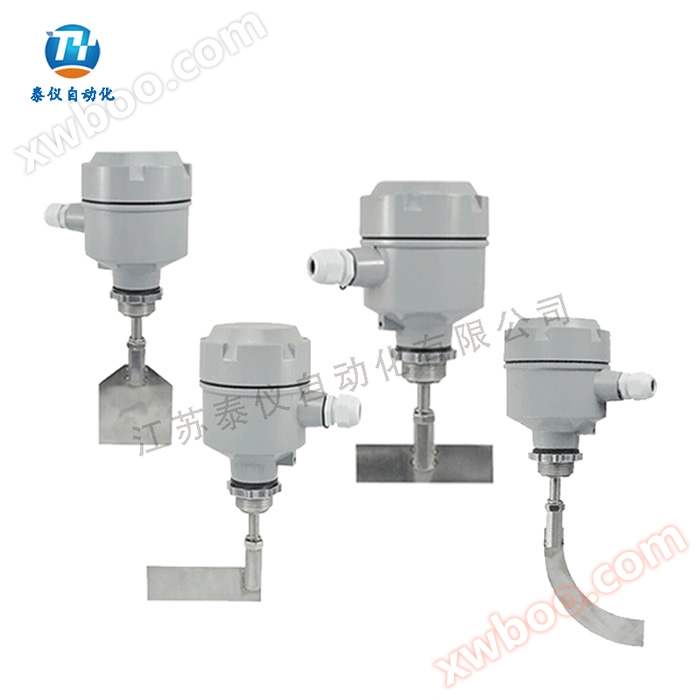
Resistance rotary switch level gauge
Resistance rotary level gauge is also known as resistance rotary level gauge or resistance rotary level switch, resistance rotary level switch, etc. I
Product details
working principle
Resistance level gauge is also known as resistance level gauge or resistance level switch, resistance level switch, etc. It is mainly called different names according to its specific purposes, and its functions are similar. The GGB400 series resistive rotary level switch uses an AC micro motor to drive the detection blades to rotate slowly after deceleration. When the level of the tested material rises and the rotation of the blades is obstructed, the main shaft of the detection mechanism undergoes rotational displacement. This displacement first activates a micro switch, emitting a signal indicating the presence of material. Subsequently, another micro switch is activated to cut off the power supply to the micro motor, causing it to stop rotating. As long as the material level in the warehouse remains unchanged, this state will be maintained indefinitely.
When the material level drops and the detection blade loses its obstruction, the detection mechanism relies on the spring tension to restore its original state. Control the micro switch action of the micro motor power supply to turn the motor on. Subsequently, another micro switch action sends out a signal, and as long as there is no material blocking the rotation of the detection blade, this state will continue to be maintained.
technical indicators
1. The imported motor has reliable performance and is supported by three bearings for safer operation
2. The unique oil seal design can prevent dust from infiltrating along the shaft
3. The torque is stable and reliable, and the torque size can be adjusted The
When the blades are subjected to excessive load, the lower clutch of the motor automatically slips
5. Splicing specifications, blades, and lengths can all be customized
1. Power supply: (A) 220V/AC, (B) 110/AC, (C) 12V/AC
2. Power consumption: 4W
3. Contact capacity: 10A/250V, (SPDT)
4. Blade speed: 1rpm
5. Material density: ≥ 0.5g/cm3
6. Working temperature: -10~+80 ℃, (up to 400 ℃ can be reached)
Ordering Instructions
Due to different requirements for accurate measurement of material level in different occasions and media, in order to use this material level switch correctly, the following points should be noted when purchasing:
To meet the needs of certain permeable or highly adhesive materials (such as asphalt, concrete, etc.), a top mounted vertical installation can be selected (with a measurement depth of up to 10 meters or more), and users can choose to extend the soft or hard shaft according to different measurement depths. When measuring depths greater than 1 meter, an extended flexible shaft should be selected. When the measurement depth is ≤ 1 meter, a hard and long axis can be used.
Note: Due to the lack of contact between the material and the output shaft root of the level gauge during top mounted installation, malfunctions rarely occur during operation. Top mounted vertical installation should be used as much as possible when the installation position allows.
2. When installing on the side, it is also possible to customize an extended version (with a stainless steel sheath and an extended shaft). The actual insertion depth should be specified when ordering, and we will design and manufacture according to the actual needs of the user.
3. Check the blade specifications, which are usually matched according to the specific gravity of sandstone materials when leaving the factory. When the specific gravity of the tested medium is light, larger blades should be selected. When detecting very light media such as wood fibers, special blades must be selected.
When the temperature of the tested medium is 80~+250 ℃, please choose the high-temperature type.

Online inquiry
-
Contacts
-
Company
-
Telephone
-
Email
-
WeChat
-
Verification Code
-
Message Content
-