
VIP member
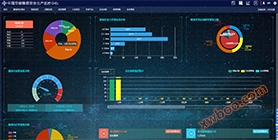
Project Information Management Platform (Group Level)
1、 Platform Overview: The project information management platform (at the group level) adopts a new concept of engineering lifecycle management
Product details
1、 Platform Overview
The project information management platform (at the group level) adopts a new concept of engineering lifecycle management. Based on the service mode of "Internet plus+Smart Transport", it uses cloud computing, big data, Internet of Things and other technologies, integrates relevant core resources, conducts all-round and three-dimensional real-time supervision on project management with controllability, data and visualization, establishes the group project management big data center, establishes the construction project informatization ecosystem of interconnection, collaboration, intelligent production, and scientific management, and conducts data mining and analysis of this data with the engineering information collected by the Internet of Things under the virtual reality environment, provides process trend prediction and expert plans, realizes visual and intelligent management of project construction, so as to improve the informatization level of project management, and provides the group with big data services through big data mining and big data analysis of projects. Implement comprehensive management of quality, safety, progress, and investment during the project construction process.
2、 Platform functional architecture
This platform enables comprehensive management of quality, safety, progress, and investment during the construction process;
This platform utilizes the Internet of Things and sensor technology to collect various types of data on construction sites in real time, process and analyze the collected data in real time, and issue real-time warnings for data exceeding standards, providing support for construction safety and quality;
The platform utilizes various regulatory business subsystems and integrates multiple data analysis models such as fuzzy evaluation and neural networks to achieve daily behavior supervision on construction sites;
This platform realizes the unified storage and management of construction site supervision information, forming a unified database;
The platform establishes a unified subsystem for basic data management, application maintenance, and data exchange to achieve unified data exchange and operation maintenance of projects under the group;
This platform provides big data services to the group through big data mining and analysis of projects.
3、 Platform technology architecture

HDFS: Hadoop Distributed File System, which provides high-throughput data access and is suitable for applications involving large-scale datasets.
Yarn: The resource management system in Hadoop 2.0 is a universal resource module that can manage and schedule resources for various applications.
Spark: A one-stop distributed computing framework based on memory for computation.
Elk: Provides standard SQL engine functionality to enable traditional applications to smoothly migrate to big data platforms through traditional applications.
Storm: A distributed, reliable, fault-tolerant real-time streaming data processing system that provides a query language similar to SQL (StreamCQL).
MPP: A large-scale parallel processing database that provides high scalability, high performance, high stability, and low cost, replacing traditional data warehouse systems and providing support for business decision-making.
4、 Platform Features
Real time processing: The platform uses data caching and distributed stream computing engines to collect, analyze, and provide real-time results of data. It supports multiple data sources, has fast processing speed, achieves high concurrency, and high availability.
Interactive Query: Stream data, file data, etc. are organized by an interactive query engine according to a data model suitable for interactive queries, and the data is analyzed and queried interactively.
Offline processing: Analyze and process massive amounts of data to generate result data for future data applications. Usually implemented through MapReduce, Spark, Hive, or Spark SQL jobs.
Integrated data warehouse: Integrated data warehouse supports horizontal expansion, full component HA, row column mixed storage, fast query analysis, compatible with traditional SQL, supports smooth application migration, solves problems such as poor timeliness, high expansion costs, and business interruption caused by expansion in traditional data warehouses, and enables efficient business decision-making.
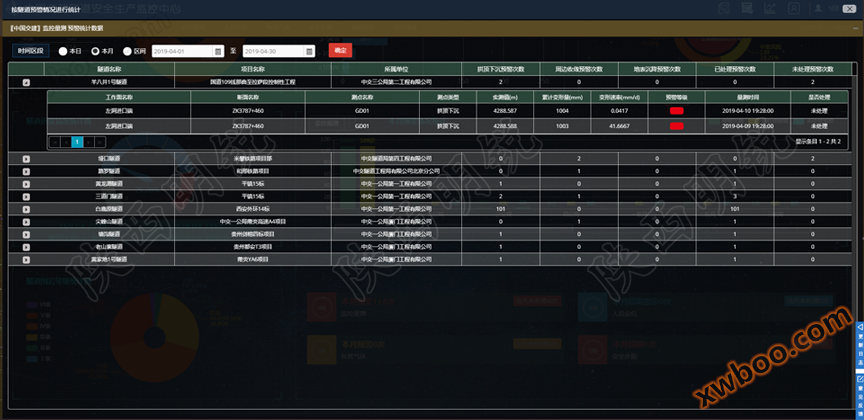
5、 Software interface diagram


Online inquiry
-
Contacts
-
Company
-
Telephone
-
Email
-
WeChat
-
Verification Code
-
Message Content
-