
VIP member
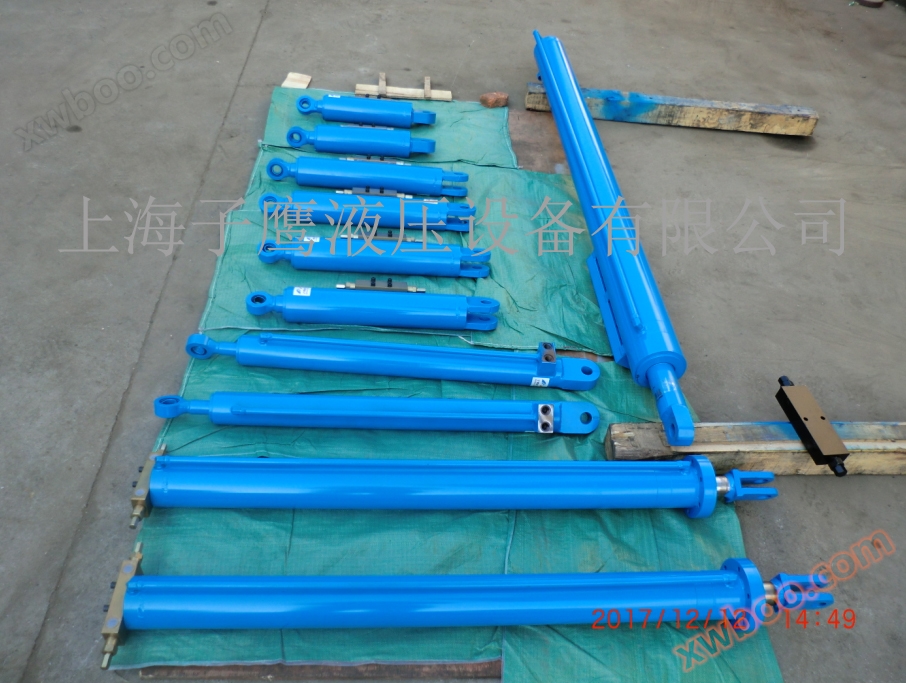
Professional supplier of balance valve hydraulic station oil cylinder
Professional supplier of hydraulic cylinders for balance valve hydraulic stations/Hydraulic cylinders are the executing components that convert hydrau
Product details
Professional supplier of hydraulic cylinders for balance valve hydraulic stations/Hydraulic cylinders are the executing components that convert hydraulic energy into mechanical energy in hydraulic systems. The phenomenon of equipment shutdown caused by hydraulic cylinder failure is not uncommon, therefore, the fault diagnosis and maintenance of hydraulic cylinders should be taken seriously.
Fault diagnosis and handling
1. Mistake or malfunction of action
There are several reasons and solutions as follows:
(1) The valve core is stuck or the valve hole is blocked. When the flow valve or directional valve core is stuck or the valve hole is blocked, the hydraulic cylinder is prone to misoperation or malfunction. At this time, the contamination of the oil should be checked; Check if dirt or gum deposits are stuck in the valve core or blocking the valve hole; Check the wear of the valve body, clean and replace the system filter.
(2) The piston rod is stuck with the cylinder or the hydraulic cylinder is blocked. At this point, no matter how you manipulate it, the hydraulic cylinder will not move or move very little. At this point, it is necessary to check whether the piston and piston rod seals are too tight, whether dirt and gum deposits have entered, whether the axis of the piston rod and cylinder barrel are aligned, and whether vulnerable parts and seals have failed.
(3) The hydraulic system control pressure is too low. The throttling resistance in the control pipeline may be too high, the flow valve may be improperly adjusted, the control pressure may be inappropriate, and the pressure source may be disturbed. At this point, the control pressure source should be checked to ensure that the pressure is adjusted to the specified value of the system.
(4) Air enters the hydraulic system. Mainly due to leaks occurring in the system. At this time, it is necessary to check the liquid level of the hydraulic oil tank, the sealing components and pipe joints on the suction side of the hydraulic pump, and whether the suction coarse filter is too dirty.
(5) The initial movement of the hydraulic cylinder is slow. At low temperatures, hydraulic oil has high viscosity and poor fluidity, resulting in slow hydraulic cylinder movement. The improvement method is to replace the hydraulic oil with better viscosity and temperature performance. At low temperatures, a heater or the machine itself can be used to heat up the oil temperature during startup. The normal operating oil temperature of the system should be maintained at around 40 ℃.
2. Unable to drive the load during operation, inaccurate piston rod stop, insufficient thrust, decreased speed, and unstable operation
The reason is:
(1) Internal leakage of hydraulic cylinder. Internal leakage of hydraulic cylinders includes leakage caused by excessive wear of the hydraulic cylinder body seal, piston rod and seal cover seal, and piston seal.
The reason for the leakage of the piston rod and sealing cover seal is due to the wrinkling, squeezing, tearing, wear, aging, deterioration, deformation, etc. of the seal. At this time, a new seal should be replaced.
The main reasons for excessive wear of piston seals are improper adjustment of the speed control valve, resulting in excessive back pressure and improper installation of seals or hydraulic oil contamination. Secondly, there are foreign objects entering during assembly and poor quality of sealing materials. The consequence is slow and powerless movement, and in severe cases, it can also cause damage to the piston and cylinder, resulting in the phenomenon of "pulling the cylinder".
(2) Hydraulic circuit leakage. Including leaks in valves and hydraulic pipelines. The maintenance method is to operate the directional valve to check and eliminate leaks in the hydraulic connection pipeline.
(3) The hydraulic oil is bypassed back to the oil tank through the overflow valve. If the overflow valve gets stuck in the valve core due to dirt, causing the overflow valve to remain open, hydraulic oil will bypass the overflow valve and flow directly back to the oil tank, resulting in no oil entering the hydraulic cylinder. If the load is too large, although the regulating pressure of the relief valve has reached the maximum rated value, the hydraulic cylinder still cannot obtain the thrust required for continuous operation and does not move.
3. Sliding or crawling of the hydraulic cylinder piston will cause unstable operation of the hydraulic cylinder
The main reasons are as follows:
(1) Hydraulic cylinder internal stagnation. Improper assembly, deformation, wear, or out of tolerance of the internal components of the hydraulic cylinder, coupled with excessive resistance to movement, can cause the piston speed of the hydraulic cylinder to change with different stroke positions, resulting in slippage or crawling. Most of the reasons are due to poor assembly quality of the parts, surface scratches or iron filings generated by sintering, which increase resistance and decrease speed. For example, the piston and piston rod are not concentric or the piston rod is bent, the hydraulic cylinder or piston rod is offset from the guide rail installation position, and the sealing ring is installed too tightly or too loosely. The solution is to repair or adjust it again.
(2) Poor lubrication or excessive machining of hydraulic cylinder aperture. Due to the relative motion between the piston and cylinder barrel, guide rail and piston rod, poor lubrication or hydraulic cylinder bore diameter deviation can exacerbate wear and reduce the straightness of the cylinder barrel centerline. In this way, when the piston works inside the hydraulic cylinder, the frictional resistance will vary, resulting in slippage or crawling. The elimination method is to first grind the hydraulic cylinder, then prepare the piston according to the matching requirements, grind the piston rod, and configure the guide sleeve.
(3) The hydraulic pump or cylinder enters the air. Air compression or expansion can cause piston slippage or crawling. The elimination measure is to check the hydraulic pump, set up a specialized exhaust device, and quickly operate the full stroke back and forth several times to exhaust.
(4) The quality of seals is directly related to slippage or crawling. When used under low pressure, O-ring seals are more prone to sliding or crawling compared to U-shaped seals due to their higher surface pressure and greater difference in dynamic and static friction resistance; The surface pressure of the U-shaped sealing ring increases with the increase of pressure. Although the sealing effect also improves accordingly, the difference in dynamic and static friction resistance also increases, and the internal pressure increases, affecting the elasticity of the rubber. Due to the increased contact resistance of the lip, the sealing ring will tilt and the lip will elongate, which is also prone to slip or crawl.
4. Scratches on the surface of the inner hole of the hydraulic cylinder body
Adverse consequences and quick repair methods:
(1) The material debris squeezed out of the scratched groove may embed into the seal, causing damage to the working part of the seal during operation and potentially creating new scratch areas.
(2) Deteriorating the surface roughness of the inner wall of the cylinder, increasing friction, and easily causing crawling phenomenon.
(3) Intensify the internal leakage of the hydraulic cylinder and reduce its working efficiency.
more
Previous: None Next: None
Online inquiry
-
Contacts
-
Company
-
Telephone
-
Email
-
WeChat
-
Verification Code
-
Message Content
-