
VIP member
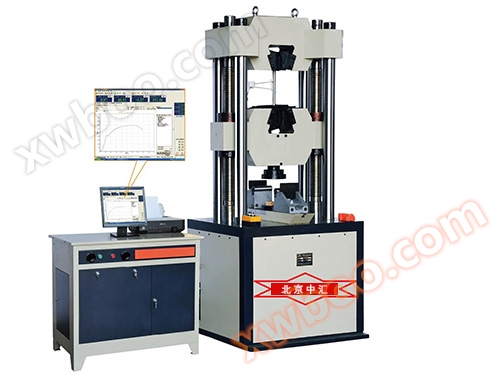
Microcomputer controlled electro-hydraulic servo testing machine
The independent hydraulic clamping system, manufactured with original imported hydraulic pump units and original hydraulic valves, ensures low noise a
Product details
Detailed description:
Precautions for use and maintenance of microcomputer controlled electro-hydraulic servo testing machine
In the mechanical testing of building materials and metal materials, due to the excellent control performance and testing accuracy of microcomputer controlled electro-hydraulic servo testing machines, they have been widely used. In large steel enterprises and quality inspection unit laboratories, microcomputer controlled electro-hydraulic servo testing machines are often operated under high loads by multiple units, and most testing personnel lack experience in instrument maintenance, resulting in frequent problems. Some users even complain about instrument problems. In fact, microcomputer controlled electro-hydraulic servo testing machines are high-precision instruments that combine light, machine, and electricity. As long as we master some skills in using them, it is enough.
Use appropriate fixtures to complete the corresponding tests, otherwise not only will the tests not be ideal, but the fixtures will also be damaged:
Microcomputer controlled electro-hydraulic servo testing machines are generally only equipped with fixtures for making standard samples. If non-standard samples are to be made, such as steel strands, overlapped steel bars, etc., corresponding fixtures need to be added. In addition, some ultra hard materials, such as spring steel, need to use special material clamps to avoid damaging the fixtures.
◆ Cleaning and Cleaning:
During the testing process, it is inevitable to generate some dust, such as oxide scale, metal debris, etc. If not cleaned in time, it will cause wear and scratches on the surface of certain parts. More seriously, if these dust enter the hydraulic system of the microcomputer controlled electro-hydraulic servo testing machine, they will cause very serious consequences such as blocking valve holes and scratching piston surfaces. Therefore, it is necessary to clean them after each use.
Hydraulic oil: Regularly check the oil tank level and replenish oil in a timely manner:
Generally, the oil should be changed every 2000 to 4000 hours of use, and attention should be paid to the oil temperature not exceeding 70 degrees. When the oil temperature exceeds 60 degrees, the cooling system should be turned on.
◆ Components should be inspected regularly:
All pressure control valves, pump regulators, as well as signal devices such as pressure relays, flow control valves, travel switches, and thermal relays, should be regularly inspected.
◆ Filter:
For filters without blockage indicators, they should generally be replaced every 6 months. For filters with blockage indicators, they should be continuously monitored and replaced immediately when the indicator alarms.
◆ Cooler:
For those using water cooling, it is necessary to regularly observe whether the cooling steel pipes are cracked or leaking. For those using air-cooled coolers, the scale should be cleaned regularly.
◆ Energy storage device
Some microcomputer controlled electro-hydraulic servo testing machines are equipped with an accumulator to ensure that the pressure of the accumulator is in normal working condition. If the pressure is found to be insufficient, it needs to be replenished immediately,
Only nitrogen gas is allowed to be charged into the accumulator.
The fasteners should be locked regularly:
The vibration after sample breakage often causes some fasteners to loosen, and regular inspections should be carried out (about 30 working days of normal use) to avoid major losses caused by loose fasteners.
The screw and transmission parts should be regularly coated with lubricating oil to prevent dry friction.
Performance characteristics of microcomputer controlled electro-hydraulic servo testing machine
★ Adopting a fully digital closed-loop control system, it can achieve the requirements of three closed-loop control of force, displacement, and deformation, and the control modes can be freely combined and smoothly switched between them;
★ The light pillar is made of medium carbon steel with high rigidity, and the surface is chrome plated and polished, which is beautiful and has good rust resistance;
The main hydraulic cylinder adopts gap sealing and Steller sealing results, with dual sealing to ensure zero leakage during long-term operation;
The displacement sensor adopts a pull-out photoelectric encoder with high accuracy and good repeatability;
The microcomputer controlled electro-hydraulic servo testing machine integrates electro-hydraulic servo automatic control, automatic measurement, data acquisition, screen display, and test result processing. It is equipped with a precision oil pump, electro-hydraulic servo valve, and PC servo controller on the platform of an oil cylinder mounted host, achieving multi-channel closed-loop control and fully automatic control and measurement of the testing process. It has the characteristics of good professionalism, high reliability, and easy upgrading, and can be continuously enriched and improved with the development of testing machine measurement and control technology and changes in testing standards.
The independent hydraulic clamping system, manufactured with original imported hydraulic pump units and original hydraulic valves, ensures low noise and smooth operation of the system, and the test sample is firmly clamped during the testing process without slipping.
The hydraulic servo loading system adopts original imported hydraulic pump units, original hydraulic valves, and high-precision wideband electro-hydraulic servo valves to ensure high precision, low noise, and fast response of the system, achieving automatic control of loading and reversing of the test; By adopting a sensitive pressure compensation system control, the hydraulic system structure is greatly simplified, with low noise. Under non full load working conditions, it basically works "quietly" without the need to add a cumbersome cooling system or isolate the hydraulic system from other rooms to isolate noise; High precision control results, without the need for cumbersome manual control using "oil delivery valve, oil return valve, throttle valve", the system is simple and clear. Special note: Currently, most domestic testing machine manufacturers use imported electro-hydraulic servo valves as control components, but due to limitations in control level, there are still deficiencies in low-speed control. Therefore, old-fashioned "oil delivery valves" are added to compensate for their shortcomings, which increases the complexity of the hydraulic system, reduces reliability, and gives people a feeling of "half soil, half ocean".
Online inquiry
-
Contacts
-
Company
-
Telephone
-
Email
-
WeChat
-
Verification Code
-
Message Content
-