
VIP member
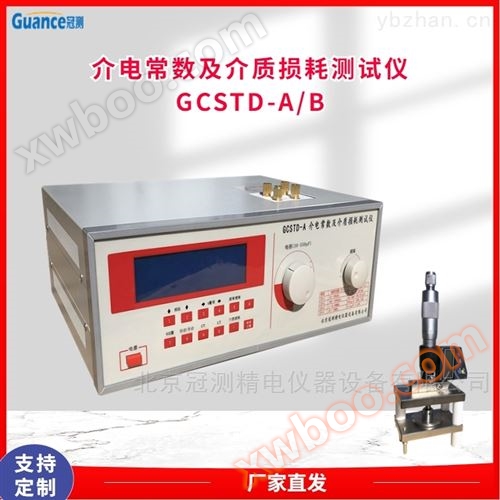
High frequency dielectric constant measurement tester
The basic principle of the high-frequency dielectric constant measurement tester is to use the high-frequency resonance method and provide a universal
Product details


High frequency dielectric constant measurement tester
Main purpose: It is mainly used to measure the dielectric constant (ε) and dielectric loss (tan δ) of non-metallic materials
Application object: This instrument is used for the application research of the properties of inorganic non-metallic new materials in scientific research institutions, schools, factories and other units.
Meet the standards:
GB/T1409-2006 Recommended methods for measuring the permittivity and dielectric loss factor of electrical insulation materials at power frequency, audio frequency, and high frequency
GB/T 5654-2007 Measurement of relative permittivity, dielectric loss factor, and DC resistivity of liquid insulating materials
GB/T 21216-2007 Test Method for Measuring Conductivity and Capacitance of Insulating Liquids to Determine Dielectric Loss Factor
GB/T 1693-2007 Determination method for dielectric constant and dielectric loss tangent of vulcanized rubber
GB/T 5594.4-1985 Test Method for Properties of Ceramic Materials in Electronic Component Structures - Test Method for Tangent Value of Dielectric Loss Angle
GBT 1409-2006 Measurement of permittivity and dielectric properties of electrical insulation materials at power frequency, audio frequency, and high frequency (including meter wave wavelengths)
Recommended method for loss factor
ASTM D150/IEC 60250 Test Method for AC Loss Characteristics and Dielectric Constant of Solid Electrical Insulation Materials (Permanent Dielectrics)
Method Overview:
High frequency dielectric constant measurement tester, is an important physical property of various ceramics such as electrical ceramics, device ceramics, capacitors, and composite materials. By measuring the dielectric loss tangent tan δ and dielectric constant (ε), various factors affecting dielectric loss and dielectric constant can be further understood, providing a basis for improving the performance of materials; The basic principle of the instrument is to use high-frequency resonance method and provide universal, multi-purpose, and multi range impedance testing. It uses a single-chip computer as the control of the instrument, and the measurement core adopts frequency digital locking, automatic setting of standard frequency test points, automatic search for resonance points, automatic conversion of Q value range, numerical display and other new technologies. It improves the tuning circuit, reduces the residual inductance of the tuning test circuit, and retains the automatic amplitude stabilization technology in the original Q meter, making the new instrument more convenient to use and the measurement values more accurate. The instrument can measure the Q value of high-frequency inductors or resonant circuits, the inductance and distributed capacitance of inductors, the capacitance and loss tangent of capacitors, the high-frequency dielectric loss of electrical materials, the effective parallel and series resistance of high-frequency circuits, and the characteristic impedance of transmission lines under high testing frequency conditions.
Remarks:
Three different types of instruments, the main difference is the frequency. Choose the appropriate model based on your own testing frequency
Electrode specifications
Solid: Material measurement diameter of Φ 38mm is optional; Adjustable thickness ≥ 15mm
Liquid: Measure the diameter of the polarizer to be Φ 38mm; Inner diameter of liquid cup: 48mm, depth: 7mm (optional)
Powder: Measure the diameter of the polarizer to be Φ 38mm; Inner diameter of liquid cup: 48mm, depth: 7mm (optional)
Sample requirement: Solid sample thickness requirement: 0.5-15mm
Product Configuration:
1. Test host: one unit
2. Test inductance: 9 pieces
3. Test fixture: 1 set (standard solid test fixture set)
Other specifications:
1. Environmental temperature: 0 ℃ to+40 ℃;
2. Relative humidity:<80%;
3. Power supply: 220V ± 22V, 50Hz ± 2.5Hz.
4. Power consumption: approximately 25W;
5. Net weight: approximately 7kg;
6. Dimensions: (length, width, height): 380 × 280 × 132 (mm)
Online inquiry
-
Contacts
-
Company
-
Telephone
-
Email
-
WeChat
-
Verification Code
-
Message Content
-