VIP member
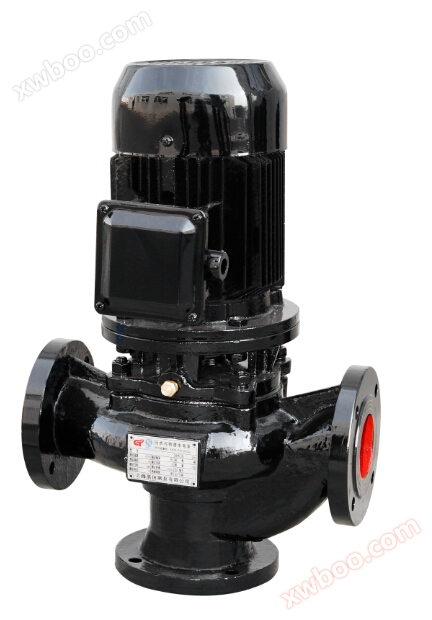
GW pipeline sewage pump
Product Name: Pipeline Sewage Pump Model: 200GW250-11-15 Product Category: Sewage Pump Series → Pipeline Sewage Pump Caliber Range: DN25-500 Flow Rang
Product details
Pipeline sewage pump


1、 Scope of application of pipeline sewage pump:
Pipeline sewage pumps are suitable for the discharge of severely polluted wastewater in factories and commercial areas, sewage discharge stations in main residential areas, water distribution systems in urban sewage treatment plants, drainage stations in civil air defense systems, water supply equipment in water plants, sewage discharge in hospitals and hotels, municipal engineering construction sites, mining equipment, rural biogas digesters, farmland irrigation and other industries. They can also be used to transport granular sewage and pollutants, as well as clean water and weakly corrosive media.
2、 Service conditions for pipeline sewage pump:
1. The pipeline sewage pump series products are suitable for rated voltage of 380V and power frequency of 50Hz;
2. The medium temperature does not exceed 40 degrees Celsius, the medium density is ≤ 1150kg/m3, and the pH value is between 5-9;
3. Altitude not exceeding 1000 meters;
4. The annual viscosity of the conveying medium shall not exceed 1000CP;
5. The material of pipeline sewage pumps is mainly cast iron and cannot be used in highly corrosive or corrosive media.
Attention: Before selecting or installing the pipeline sewage pump, the actual usage conditions must comply with the above terms to ensure the correct use of the product!

If you have any questions, you can call: 021-57239999 orClick to consult experts for selection and quotation
3、 Characteristics of pipeline sewage pump:
1. Adopting a double blade impeller structure greatly improves the ability of pollutants to pass through;
2. The pipeline sewage pump adopts a new type of friction pair for sealing and operates in the oil chamber for a long time;
3. The pipeline sewage pump has a compact overall structure, small volume, low noise, significant energy-saving effect, easy maintenance, and convenient replacement for users;
4. The automatic control cabinet can automatically control the over movement and stop of the pipeline sewage pump according to the required liquefaction changes, without the need for dedicated personnel supervision, making it extremely convenient to use;
5. Installation methods can be provided according to user needs, and pipeline sewage pumps bring great convenience to installation and maintenance. People do not need to enter the sewage pit for this purpose;
6. Can be used within the design scope while ensuring that the motor does not overload;
7. If the pipeline sewage pump is equipped with an outdoor motor, there is no need to build a pump room, and it can be directly installed and used outdoors to save costs.
4、 Common fault analysis and troubleshooting methods:
|
Fault phenomenon |
cause analysis |
Troubleshooting |
|
Insufficient flow or no water output |
1Wrong rotation direction of impeller 2Is the outlet valve open and intact 3The impeller of the pipeline is blocked 4The speed is too low 5The head is too high 6High density of pumping medium 7High viscosity of the medium 8Wear at the sealing ring mouth
|
1Adjust the rotation direction of the impeller 2Check, repair, and eliminate 3Clean up debris 4Check electrical equipment and circuits 5Change the pump or reduce the head 6Dilute with water to reduce concentration 7Reduce viscosity 8Replace
|
|
Unstable operation |
1Unbalanced impeller 2Bearing damage
|
1Send to the manufacturing plant for replacement or calibration 2Replace
|
|
The pump cannot start |
1Lack of phase 2The impeller is stuck 3Winding, connector or cable open circuit 4The stator winding is burnt out 5Electrical control malfunction
|
1Check the circuit for repair 2Remove debris 3Check and repair with an ohmmeter 4Repair and replace the winding 5Repair or replace
|
|
Excessive current |
1Low working voltage 2Pipeline and impeller are blocked 3The height or viscosity of the liquid being pumped is relatively high 4Using a low head
|
1Adjust the working voltage 2Clean up pipeline and impeller blockages 3Change density and viscosity 4Reduce flow and increase head
|
|
Low insulation resistance |
1Leakage at the power supply terminal of the cable 2Cable damage 3Mechanical seal wear leads to leakage 4EachOFailure of the sealing ring 5The casing is corroded by the medium and leaks water
|
1Tighten the compression nut 2Replace 3Replace 4Replace 5Repair
|
If you have any questions, you can call: 021-57239999 orClick to consult experts for selection and quotation
Online inquiry
-
Contacts
-
Company
-
Telephone
-
Email
-
WeChat
-
Verification Code
-
Message Content
-