VIP member

FLECK2850 Dual Tank 8-20T/H Fully Automatic Control Valve Boiler Water Treatment Softener for Spot Sales
FLECK2850 dual tank 8-20T/H fully automatic control valve boiler water treatment softener, fully automatic controller to control the equipment's fully
Product details
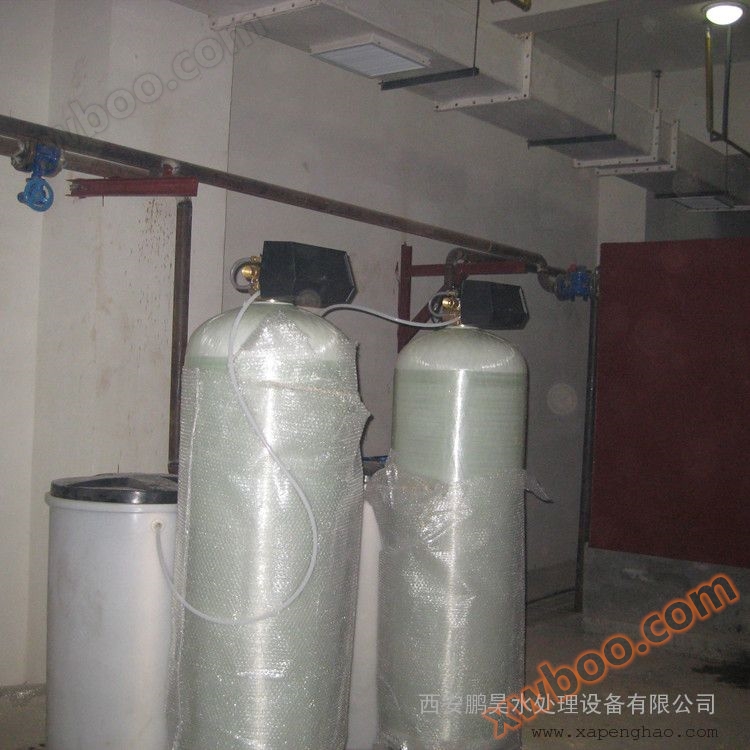
The circulation process of a fully automatic water softener consists of the following specific steps:
1. The raw water flows through a container (softener) containing ion exchange resin under a certain pressure and flow rate. The exchangeable ion Na+contained in the resin undergoes ion exchange with cations (Ca2+, Mg2+, Fe2+, etc.) in water to achieve the required Ca2+and Mg2+content in the effluent from the container.
2. After the failure of the backwash resin, it should be backwashed with water from bottom to top before regeneration. The purpose of backwashing is twofold: firstly, to loosen the resin layer that is compressed during operation, which is conducive to the full contact between resin particles and the regeneration solution; secondly, to remove suspended solids accumulated on the surface of the resin during operation and suspended solids on the surface of the resin. At the same time, some broken resin particles can also be discharged with the backwash water. In this way, the water flow resistance of the exchanger will not increase.
3. The regeneration solution flows through the failed resin layer at a certain concentration and flow rate, reducing and regenerating the resin to restore its original exchange capacity. 4. After the regeneration solution is completely replaced, there is still salt solution in the expansion space of the exchanger and the resin layer that has not yet participated in the regeneration exchange. In order to fully utilize this salt solution, clean water with a flow rate less than or equal to that of the regeneration solution is used for cleaning, with the aim of preventing mixing between the clean water and the regeneration solution.
5. The purpose of washing is to remove residual regenerated waste liquid from the resin layer, usually at normal operating flow rate until the effluent is qualified.
6. Add water to the salt tank to meet the required salt consumption for dissolution and regeneration.
1. The raw water flows through a container (softener) containing ion exchange resin under a certain pressure and flow rate. The exchangeable ion Na+contained in the resin undergoes ion exchange with cations (Ca2+, Mg2+, Fe2+, etc.) in water to achieve the required Ca2+and Mg2+content in the effluent from the container.
2. After the failure of the backwash resin, it should be backwashed with water from bottom to top before regeneration. The purpose of backwashing is twofold: firstly, to loosen the resin layer that is compressed during operation, which is conducive to the full contact between resin particles and the regeneration solution; secondly, to remove suspended solids accumulated on the surface of the resin during operation and suspended solids on the surface of the resin. At the same time, some broken resin particles can also be discharged with the backwash water. In this way, the water flow resistance of the exchanger will not increase.
3. The regeneration solution flows through the failed resin layer at a certain concentration and flow rate, reducing and regenerating the resin to restore its original exchange capacity. 4. After the regeneration solution is completely replaced, there is still salt solution in the expansion space of the exchanger and the resin layer that has not yet participated in the regeneration exchange. In order to fully utilize this salt solution, clean water with a flow rate less than or equal to that of the regeneration solution is used for cleaning, with the aim of preventing mixing between the clean water and the regeneration solution.
5. The purpose of washing is to remove residual regenerated waste liquid from the resin layer, usually at normal operating flow rate until the effluent is qualified.
6. Add water to the salt tank to meet the required salt consumption for dissolution and regeneration.
Online inquiry
-
Contacts
-
Company
-
Telephone
-
Email
-
WeChat
-
Verification Code
-
Message Content
-