
VIP member
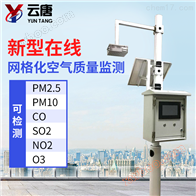
Atmospheric Environment and Air Quality Monitoring Station
The AQI grid based atmospheric environment air quality monitoring station is a new type of online multi parameter monitoring system for air quality pr
Product details
Atmospheric Environment and Air Quality Monitoring StationIt is a grid based air quality monitoring station based on the Internet of Things, adopting a modular design and a split sampling head (four air and two dust (SO))2、 NO2、 CO、O3、 PM2.5, PM10) and temperature and humidity sensors are independently installed outside the main control box, and can operate automatically and normally 24/7 in harsh unmanned environments. They are networked wirelessly to achieve real-time data monitoring and transmission, and collected on the "Internet of Things Big Data Transmission Platform" to provide a data foundation for grid monitoring.
Technical features:
1. Meets the requirements of GB/T17626.2-2006 electrostatic discharge immunity standard. Complies with the requirements of GB/T17626.3-2006 standard for radio frequency electromagnetic field radiation immunity. Complies with the requirements of GB/T17626.4-2008 electrical fast transient burst immunity standard. Meets the requirements of GB/T17626.5-2008 surge (impact) immunity standard.
2. Independently developed and produced, the core sensor components are imported with original packaging.
3. All sensor modules are externally mounted on the main control box and installed independently.
4. Adopting a unique physical air path design pattern, it not only ensures the fluidity of air, but also avoids the maintenance problems of spare parts caused by pump suction equipment.
5. The whole machine adopts modular design, allowing for free combination of monitoring parameters, making maintenance and repair simple and convenient.
6. Support remote device restart, main program upgrade, and battery level feedback.
7. Combined with the IoT big data transmission platform, remote control, collection frequency setting, and data report generation can be achieved.
8. Beautiful and elegant bracket design, double-layer door instrument box, built-in 7-inch touch screen, real-time display of monitoring data, no visible wires outside after installation.
9. When using AC 220V+DC 12V solar power supply mode, the equipment can ensure that there is no power outage throughout the year.
10. Support local data storage and export, ensuring data is not lost even when the device is offline.
11. Local storage can last for more than 10 years, making it convenient for long-term observation, data accumulation, and analysis.
Atmospheric Environment and Air Quality Monitoring StationInstallation preparation:
1. Soil ground. A 50 * 50 * 50cm soil pit needs to be excavated, with embedded parts placed in the center, and concrete poured (flat level). The top of the embedded parts should be 5cm above the ground. When pouring concrete, the threads of the embedded parts should be wrapped and solidified for 7-10 days before installing the equipment.
Preparation of materials and tools: shovel, tap water, concrete, trowel, several boards, medium cross screwdriver, level ruler, open-end wrench, pliers
2. Hard ground (thickness not less than 10cm). According to the installation holes on the bracket base, drill four circular holes with a diameter of 18mm and a depth of 120mm on the hard ground, insert M14 expansion bolts, and then directly install the equipment.
Material and tool preparation: drilling hammer, hammer, medium Phillips screwdriver, level ruler, adjustable wrench, pliers

Online inquiry
-
Contacts
-
Company
-
Telephone
-
Email
-
WeChat
-
Verification Code
-
Message Content
-