
VIP member
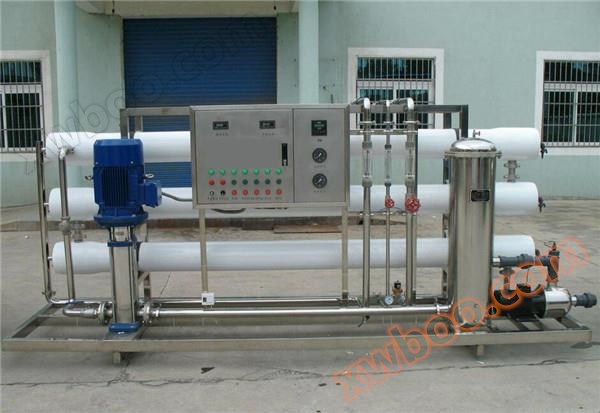
5t/h reverse osmosis equipment
A 5t/h reverse osmosis equipment uses sufficient pressure to separate the solvent (usually water) in the solution through a reverse osmosis membrane (
Product details
5t/h reverse osmosis equipmentIt is the process of using sufficient pressure to separate the solvent (usually water) in a solution through a reverse osmosis membrane (or semi permeable membrane), which is called reverse osmosis because it is in the opposite direction of natural permeation. The reverse osmosis method can adapt to various types of raw water with high salt content, especially in water treatment projects with high salt content, and can achieve good technical and economic benefits.
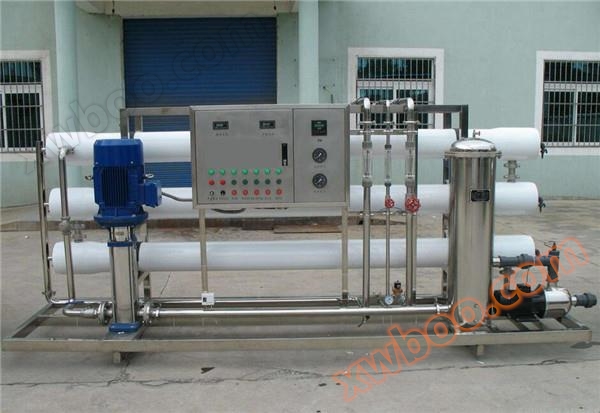
Reverse osmosis equipment relies on the characteristic of reverse osmosis membranes to separate solvents and solutes in a solution under certain pressure
Principle of 5t/h reverse osmosis equipment:
Reverse osmosis equipment relies on the characteristic of reverse osmosis membranes to separate solvents and solutes in a solution under certain pressure. Permeation is a physical phenomenon, and reverse osmosis is the process of applying greater pressure than natural osmosis to water containing salt and various fine impurities (i.e. raw water), causing the water to reverse permeate from the high concentration side to the low concentration side. The vast majority of fine impurity particles, organic matter, heavy metals, bacteria, viruses, and other harmful substances in raw water are discharged through sewage outlets.
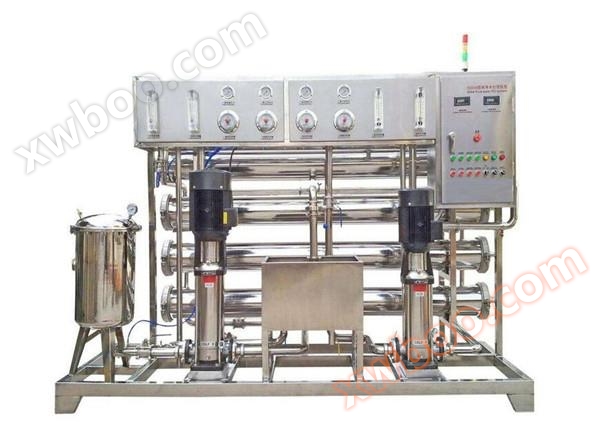
Reverse osmosis equipment relies on the characteristic of reverse osmosis membranes to separate solvents and solutes in a solution under certain pressure
Application of 5t/h reverse osmosis equipment:
1. Obtain pure water and high-purity water required for electronic industry production processes such as LCD displays, circuit boards, computer hard drives, integrated circuits, and monocrystalline silicon semiconductors;
2. To produce softened water and desalinated pure water required for heating and thermal power generation boilers, as well as for low-pressure boiler feedwater in factories and mining enterprises;
3. Production of medical injections, pharmaceuticals, biochemical products, pure water, medical sterile water, and pure water for artificial kidney dialysis required by the pharmaceutical industry;
4. To produce pure drinking water, distilled water, mineral water, alcohol brewing water, and pure water for blending in the beverage (including alcoholic beverages) industry;
5. Producing domestic and drinking water from seawater and brackish water;
⒍ Preparation of deionized water for electroplating process; Pure water for battery production process; Pure water for automobiles, household appliances, building materials products, etc; Surface coating and cleaning with pure water; Pure water is used for coated glass; The hardness and desalination water required for textile printing and dyeing processes;
7. Petrochemical industry such as chemical reaction cooling water; Pure water used in the manufacturing process of chemical agents, fertilizers, fine chemicals, and cosmetics;
High quality water supply network systems and swimming pool water purification for hotels, buildings, community airports, and real estate properties;
9. Treatment and reuse of wastewater from circuit boards, electroplating, and electronic industries.
Online inquiry
-
Contacts
-
Company
-
Telephone
-
Email
-
WeChat
-
Verification Code
-
Message Content
-