
VIP member

Product details
1. Principle
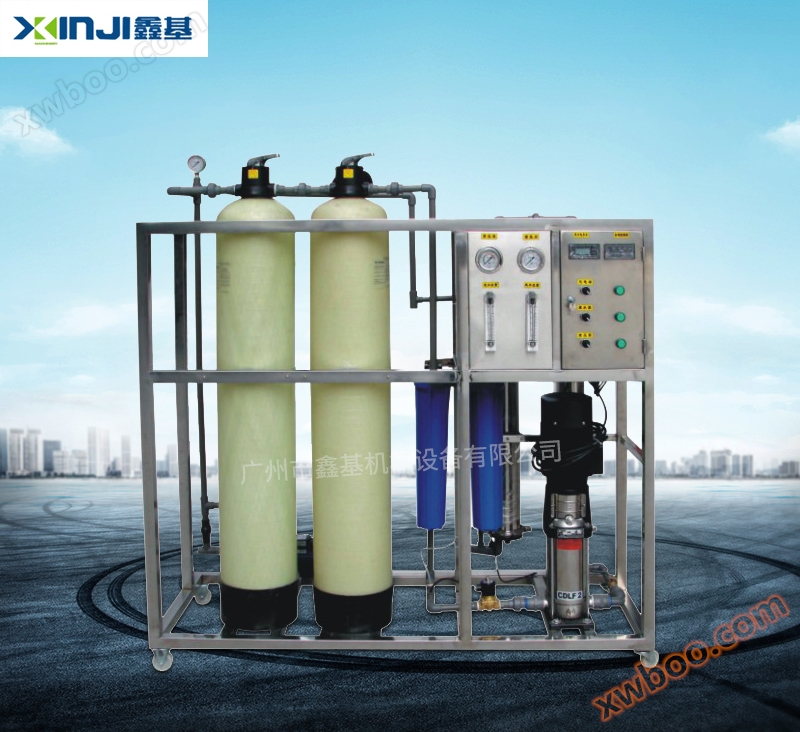
Reverse osmosis equipment is used to filter raw water through fine filters, granular activated carbon filters, compressed activated carbon filters, etc., and then pressurize it with a pump. Using a reverse osmosis membrane (RO membrane) with a pore size of 1/10000 μ m (equivalent to 1/6000 the size of Escherichia coli and 1/300 the size of a virus), high concentration water is transformed into low concentration water. At the same time, industrial pollutants, heavy metals, bacteria, viruses, and other impurities mixed into the water are completely isolated, thus achieving the physical and chemical indicators and hygiene standards specified for drinking, and producing pure water. (Salt removal rate can reach up to 99.8%)
2. Characteristics
The import rate of accessories reaches 90%; High and low pressure automatic shutdown, level gauge automatic shutdown, startup, automatic water quality monitoring. The automatic backwashing of the membrane is controlled by LC microcomputer and has a small volume; Low energy consumption, pollution-free, easy to operate and maintain; Desalination rate ≥ 97%, conductivity ≤ 10US/CM, suitable for use in areas with raw water quality ≤ 400US/CM.
After reverse osmosis, the pure water is further removed of ions through a mixed bed of cations and anions to reduce ion content and meet the standard of ultrapure water (conductivity ≤ 1US/CM).
Online inquiry
-
Contacts
-
Company
-
Telephone
-
Email
-
WeChat
-
Verification Code
-
Message Content
-